10 Questions Canadian Shoppers Ask Before Buying the 2026 Honda CR-V
August 04 2026,
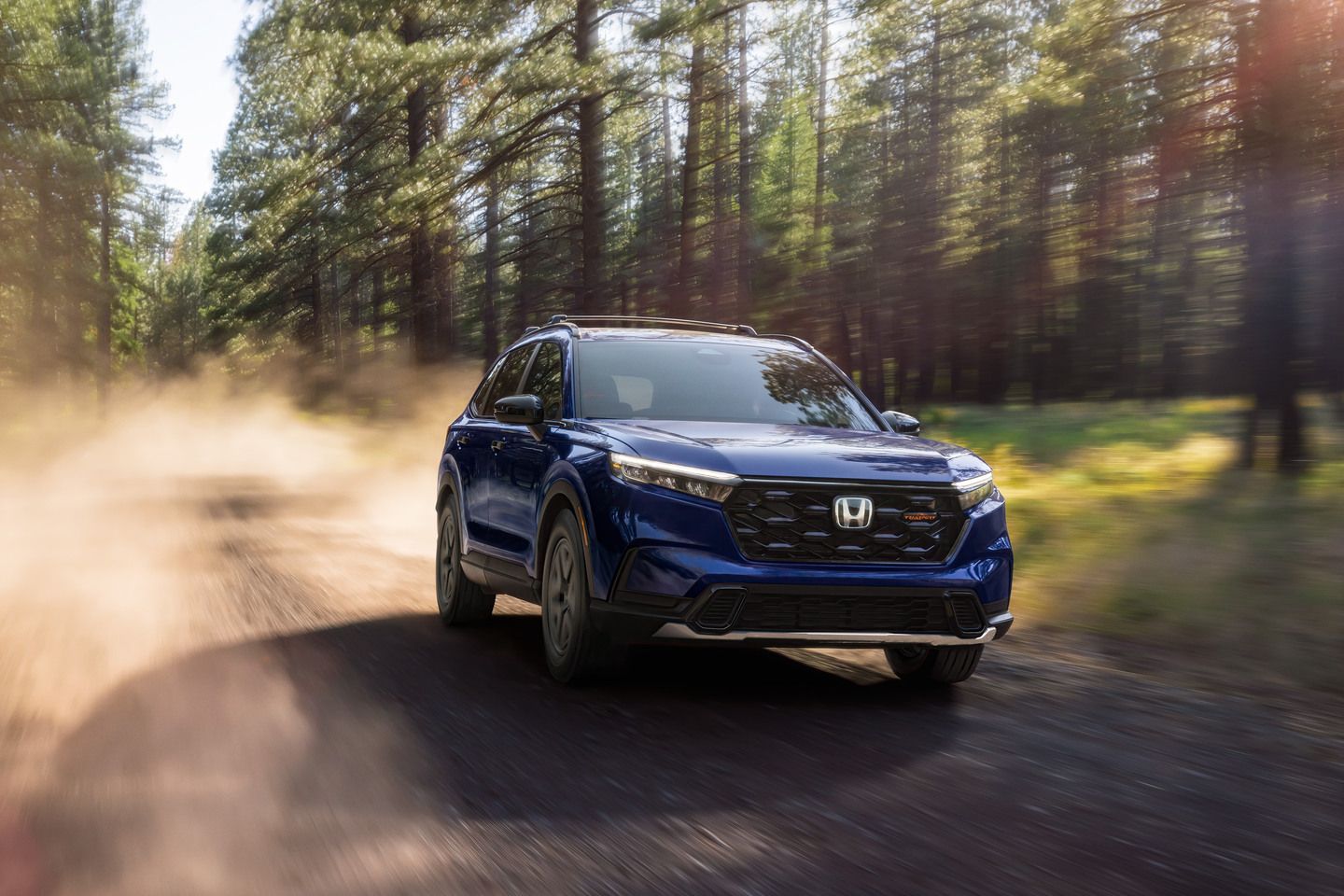
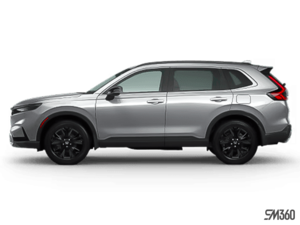
Shopping for a compact SUV usually means narrowing a long list of trims down to the one that actually fits your daily routine. The 2026 Honda CR-V spans six trims and two powertrain families, which can make that narrowing feel like homework. This guide answers the questions Canadian shoppers ask most often about the CR-V, from how the gas and hybrid versions differ to what to check before a test drive.
What Is the 2026 Honda CR-V, and Who Is It Built For?
The 2026 CR-V is a compact SUV built for drivers who want daily flexibility without stepping up to a larger vehicle. It’s the most popular model in the Honda lineup, and its hybrid versions make it the best-selling hybrid SUV in Canada.
The CR-V works as a primary family vehicle, a commuter, or a weekend hauler, since it’s sized for typical parking spots and garages while still offering room for passengers and cargo. All CR-V models, gas and hybrid, are assembled in Canada.
What Powertrains Does the 2026 CR-V Offer, and Which Trims Get Them?
The 2026 CR-V comes in two powertrain families. LX and Sport use a 1.5-litre turbocharged four-cylinder engine rated at 190 horsepower and 179 lb-ft of torque, paired with a CVT.
Sport Hybrid, TrailSport Hybrid, EX-L Hybrid, and Touring Hybrid use a 2.0-litre four-cylinder paired with a two-motor hybrid system, producing 204 horsepower and 247 lb-ft of torque, with that torque available from 0 to 2,000 rpm versus 1,700 to 5,000 rpm on the turbo engine.
How Is the CR-V Lineup Organized Across Entry, Mid-Range, and Top Trims?
The CR-V lineup breaks into three groups. LX is the entry point, built around the turbocharged gas engine with FWD standard and AWD available. Sport moves the gas engine to standard AWD and adds a larger 10.2-inch digital instrument display in place of LX’s 7-inch gauge cluster.
Sport Hybrid and TrailSport Hybrid form the mid-range, both hybrid-powered with standard AWD; TrailSport Hybrid adds all-terrain tires and rugged styling for drivers who want more ground presence. EX-L Hybrid and Touring Hybrid sit at the top, adding leather seating, more speakers, and, on Touring Hybrid, a 12-speaker BOSE audio system and Google built-in.
How Does the CR-V Drive Around Town and on the Highway?
Day to day, the CR-V is tuned for easy manoeuvring. Its 11.3-metre curb-to-curb turning diameter and 12.3:1 steering ratio make tight parking lots and pickup lanes manageable. A MacPherson strut front suspension and multi-link rear are tuned for a comfortable ride over rough pavement.
On the highway, Adaptive Cruise Control and Lane Keeping Assist, both part of the Honda Sensing suite, reduce the workload on longer drives. The CR-V doesn’t feel like a chore in traffic or on the highway, which is a large part of its everyday appeal.
How Much Do the Gas and Hybrid Powertrains Differ in Everyday Responsiveness?
The hybrid system changes how the CR-V feels off the line more than the numbers alone suggest. Combined output is 204 horsepower and 247 lb-ft, with all of that torque available from 0 to 2,000 rpm, so the electric motor delivers power immediately.
The turbocharged gas engine peaks at 190 horsepower and 179 lb-ft, with torque building between 1,700 and 5,000 rpm. In practice, hybrid trims feel quicker to respond at low speeds around town, while the gas trims still deliver steady, predictable acceleration.
How Much Passenger and Cargo Space Does the CR-V Offer?
Passenger space is generous: Sport Hybrid and TrailSport Hybrid offer 2,931 litres of passenger volume, with 970 mm of front and rear headroom and 1,049 mm/1,042 mm of front/rear legroom.
Cargo capacity varies by powertrain. Sport Hybrid and TrailSport Hybrid hold 1,028 litres behind the rear seats and 2,030 litres with the 60/40 split rear seats folded. The gas-powered Sport offers more room, at 1,113 litres behind the seats and 2,166 litres folded. Buyers who prioritize maximum cargo room over fuel economy may prefer a gas trim for that reason.
Is the CR-V Practical for School Runs, Errands, and Trip Packing?
The CR-V’s 60/40 split-folding rear seats are standard, so hauling longer items alongside passengers doesn’t require an all-or-nothing cargo decision. Sport Hybrid and TrailSport Hybrid add a power tailgate for hands-free loading, along with four cargo tie-down anchors to keep gear from shifting.
The Sport trim adds an adjustable cargo floor with two height settings, useful for stacking bins or keeping a flat load surface with the seats folded. Between the folding seats, tie-downs, and tailgate options, the CR-V handles the daily mix of school runs, errands, and weekend loads without much rearranging.
Which Features Matter Most for Value-Focused Canadian Buyers?
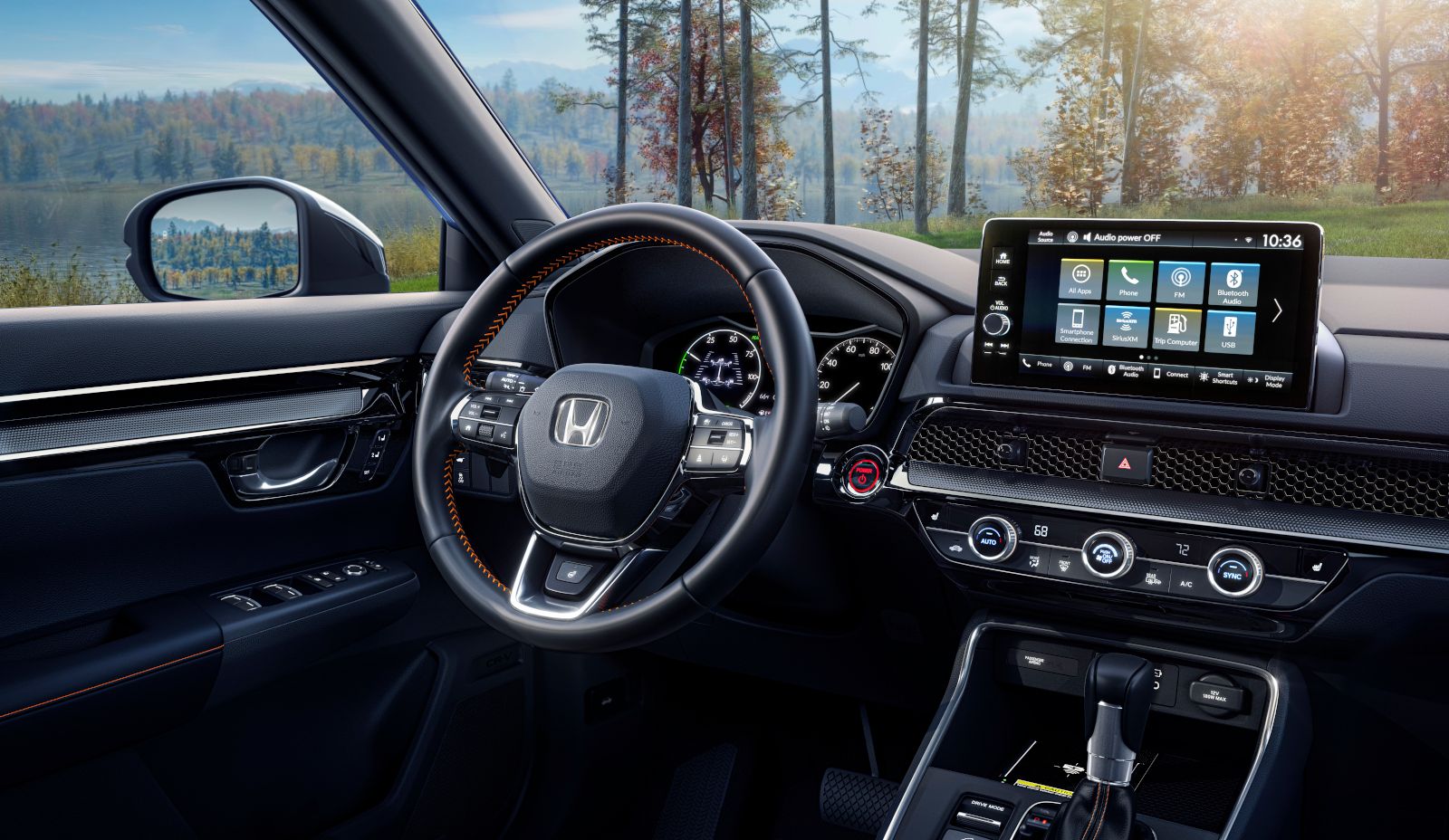
Honda made several features standard across the entire CR-V lineup for 2026, rather than reserving them for higher trims. Every CR-V gets a 9-inch colour touchscreen, wireless Apple CarPlay and Android Auto, and a wireless phone charger.
The Honda Sensing suite, which includes Collision Mitigation Braking, Adaptive Cruise Control, and Lane Keeping Assist, is also standard on all CR-V models, along with the Advanced Compatibility Engineering body structure and 10 airbags. For value-focused buyers, the entry-level LX already includes the core safety and connectivity features that matter most day to day.
Why Do Hybrid Trims Appeal to Buyers Who Want Stronger Efficiency and Standard AWD?
The four hybrid trims, Sport Hybrid, TrailSport Hybrid, EX-L Hybrid, and Touring Hybrid, pair standard all-wheel drive with the strongest fuel economy in the lineup. Combined ratings run from 6.4 L/100km on Sport Hybrid, EX-L Hybrid, and Touring Hybrid to 6.7 L/100km on TrailSport Hybrid, compared with 8.4 L/100km on the gas-powered Sport.
For buyers who don’t want to choose between efficiency and all-wheel traction, the hybrid trims remove that trade-off: AWD comes standard on every hybrid trim, alongside the two-motor system’s 204 horsepower and 247 lb-ft of torque.
What Should You Check in Person Before a Test Drive?
Sit in both the front and rear seats to check headroom and legroom for your usual passengers. Load a bag or stroller into the cargo area to see how the opening height and, on higher trims, the power tailgate work for you.
Try the 9-inch touchscreen and, on Sport, Sport Hybrid, TrailSport Hybrid, EX-L Hybrid, and Touring Hybrid, the 10.2-inch digital instrument display to judge how easy the controls are to read at a glance. Check over-the-shoulder visibility and the rearview camera while parked, since that’s easier to judge standing still than mid-drive.
Quick Answers: 2026 CR-V at a Glance
- Two gas trims (LX, Sport) use a 1.5L turbocharged engine (190 hp/179 lb-ft) with a CVT.
- Four hybrid trims (Sport Hybrid, TrailSport Hybrid, EX-L Hybrid, Touring Hybrid) use a 2.0L two-motor hybrid system (204 hp/247 lb-ft) with standard AWD.
- Combined fuel economy ranges from 6.4 L/100km (Sport Hybrid, EX-L Hybrid, Touring Hybrid) to 8.4 L/100km (Sport).
- Every CR-V trim gets a 9-inch touchscreen, wireless CarPlay/Android Auto, wireless charging, and the Honda Sensing safety suite standard.
Choosing the Right 2026 CR-V Trim for You
|
Trim |
Powertrain |
Drivetrain |
Combined Fuel Economy |
|
LX |
1.5L turbocharged gas |
FWD standard, AWD available |
7.8 L/100km (FWD) / 8.4 L/100km (AWD) |
|
Sport |
1.5L turbocharged gas |
AWD standard |
8.4 L/100km |
|
Sport Hybrid |
2.0L hybrid, two-motor system |
AWD standard |
6.4 L/100km |
|
TrailSport Hybrid |
2.0L hybrid, two-motor system |
AWD standard |
6.7 L/100km |
|
EX-L Hybrid |
2.0L hybrid, two-motor system |
AWD standard |
6.4 L/100km |
|
Touring Hybrid |
2.0L hybrid, two-motor system |
AWD standard |
6.4 L/100km |
Each step up the CR-V lineup adds a specific feature set, useful for matching a trim to daily habits. LX covers the essentials: standard connectivity, safety tech, and the option to add AWD later. Sport adds standard AWD and the larger 10.2-inch instrument display for drivers who want more information at a glance without moving to a hybrid.
Sport Hybrid and TrailSport Hybrid pair the hybrid system’s efficiency with standard AWD, and TrailSport Hybrid trades a slightly lower fuel economy rating for all-terrain tires and rugged styling. EX-L Hybrid and Touring Hybrid add leather seating and stronger audio, with Touring Hybrid’s 12-speaker BOSE system and Google built-in at the top of the lineup.
Drivers who mostly stay in town may find Sport Hybrid covers their needs, while those who spend more time on gravel or want the most content should look toward TrailSport Hybrid or Touring Hybrid.
Book Your 2026 CR-V Test Drive at Lallier Honda 640
The 2026 Honda CR-V pairs two turbocharged gas trims with four hybrid trims, giving shoppers a compact SUV that scales from a straightforward daily commuter to a better-equipped hybrid with standard all-wheel drive and added tech.
Visit Lallier Honda 640 to sit in the CR-V trims that interest you, load your own gear into the cargo area, and book a test drive to feel the difference between the gas and hybrid powertrains in person.