Honda Hybrid: Is It Truly Cost-Effective for Your Daily Commute?
October 07 2026,

Living on the North Shore often means racking up mileage quickly due to the distance to major urban centers. Between commuting into Montreal on Highway 15 or Highway 25, running errands in Terrebonne, shuttling to hockey practice in Mascouche, and weekend trips to the cottage in Saint-Donat, the odometer on many family vehicles climbs fast. Under these conditions, the question naturally arises: does a Honda hybrid vehicle genuinely lower your fuel expenses?
The short answer is yes in most cases, but the scale of your savings depends directly on your driving habits. Here is how to evaluate the cost-saving potential of a Civic, Accord, or CR-V Hybrid based on your daily routine.
How Honda’s Hybrid Powertrain Saves Fuel
All three models use Honda’s two-motor hybrid system, which pairs a 2.0-liter 4-cylinder engine with two electric motors and a lithium-ion battery pack. This battery recharges dynamically while driving, particularly whenever the vehicle decelerates or brakes.
The principle is straightforward: the more you brake and accelerate, the more energy the system recovers. This is why Honda hybrids consume less fuel in city driving than on the highway—the exact opposite of a traditional gas-powered engine.
Highway vs. Traffic Jams: Two Very Different Realities
Take the all-wheel-drive CR-V as an example. According to Honda Canada figures, the gas-powered version consumes 9.1 L/100 km in the city compared to 6.0 L/100 km for the hybrid variant—a difference of 3.1 L/100 km. On the highway, the gap narrows: 7.6 L/100 km for gas versus 6.9 L/100 km for hybrid, a 0.7 L/100 km difference. Even on the highway, the hybrid comes out ahead.
This holds true across every Honda hybrid model.
In real-world driving, someone cruising at steady speeds on Highway 640 outside rush hour will see genuine, yet modest, savings. Conversely, a driver navigating morning gridlock on Highway 25 toward the Olivier-Charbonneau Bridge, or the usual bottleneck approaching Montreal on Highway 40, will reap the full benefits of hybrid technology because the efficiency gap between gas and hybrid widens dramatically in stop-and-go conditions.
Annual Numbers Breakdown
To estimate annual savings, we can look at the combined fuel consumption for each model. The calculation below is based on 20,000 km per year—a standard baseline for North Shore residents commuting into Montreal.
| Model | Gas (Combined) | Hybrid (Combined) | Difference | Fuel Saved over 20,000 km |
| Civic Sedan (LX vs. Sport Hybrid) | 6.6 L/100 km | 4.9 L/100 km | 1.7 L/100 km | 340 liters |
| Accord (SE vs. Sport-L Hybrid) | 7.3 L/100 km | 5.3 L/100 km | 2.0 L/100 km | 400 liters |
| CR-V AWD (Sport vs. Sport Hybrid) | 8.4 L/100 km | 6.4 L/100 km | 2.0 L/100 km | 400 liters |
While these figures are estimates, they closely reflect real-world driving conditions.
To calculate monetary savings, simply multiply the liters saved by the current pump price. If you drive 30,000 km annually, fuel savings on the CR-V jump to 600 liters. The higher your mileage and the more stop-and-go your commute, the greater the financial benefit.
With gas prices hovering near two dollars per liter, this translates to roughly $650 to $800 in fuel savings each year.
Three Models, Three Profiles
-
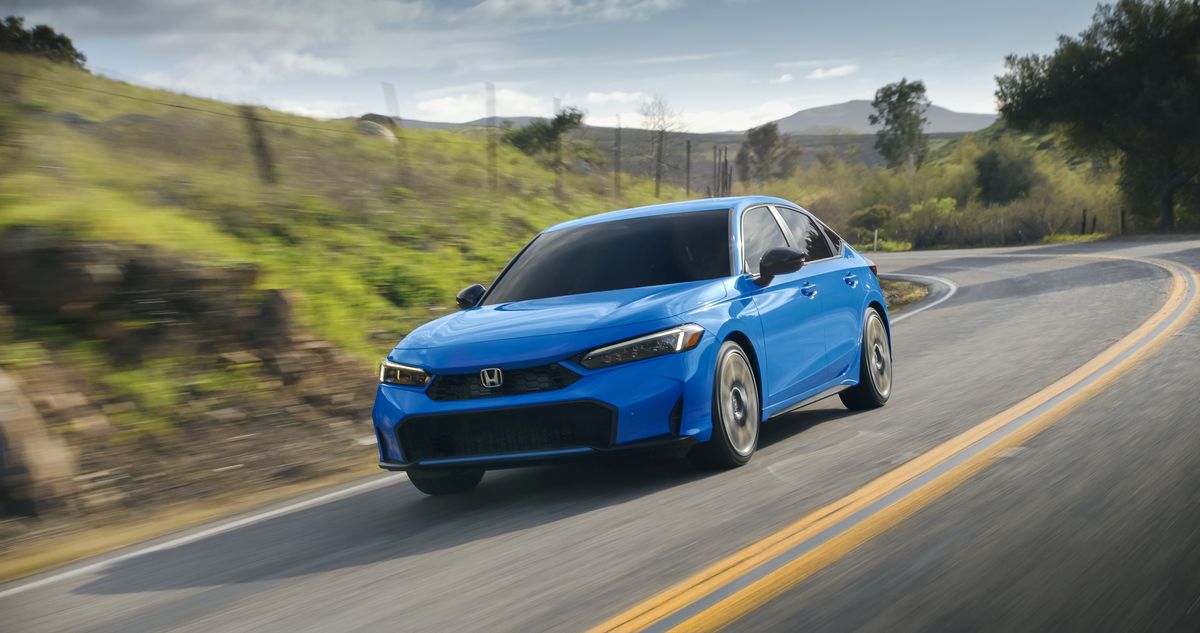
Civic Hybrid: The most fuel-efficient of the trio, delivering 4.9 L/100 km combined city/highway (sedan). Producing 200 horsepower and 232 lb-ft of torque, it is tailor-made for weekday commuters.
-
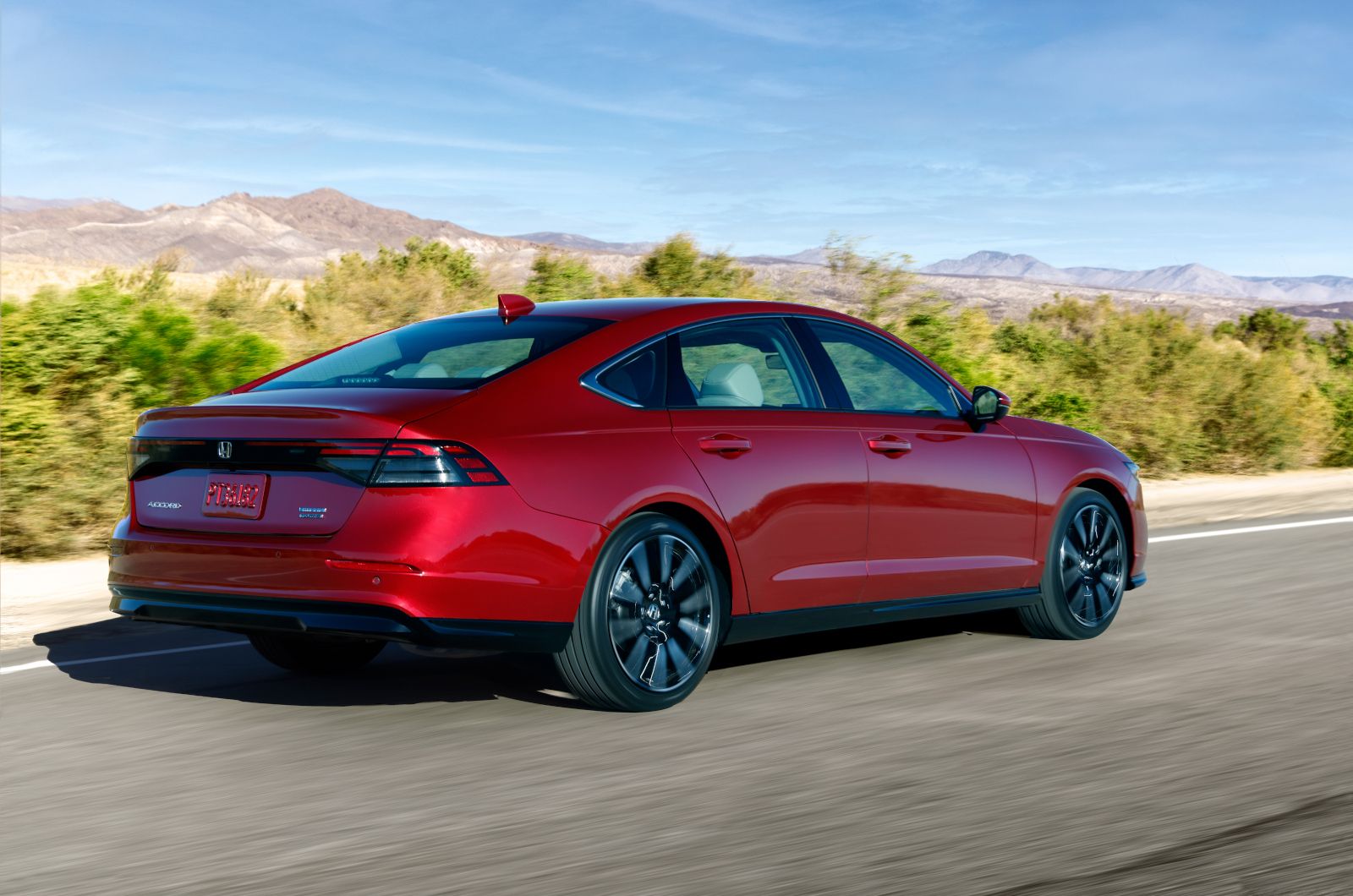
Accord Hybrid: Produces 204 horsepower and 247 lb-ft of torque. Featuring a generous 473-liter trunk, it delivers exceptional ride comfort on long commutes. Available in Sport-L Hybrid and Touring Hybrid trims, it is ideal for those prioritizing a quiet, premium road experience.
-
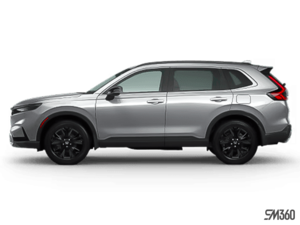
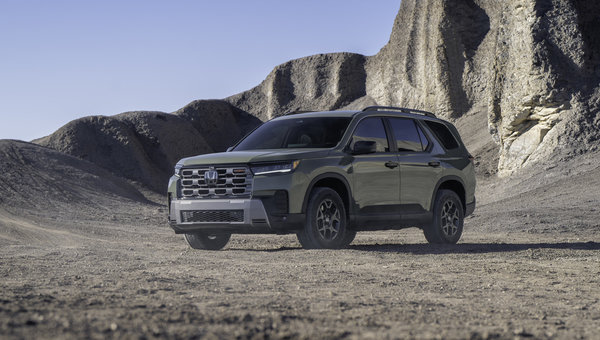
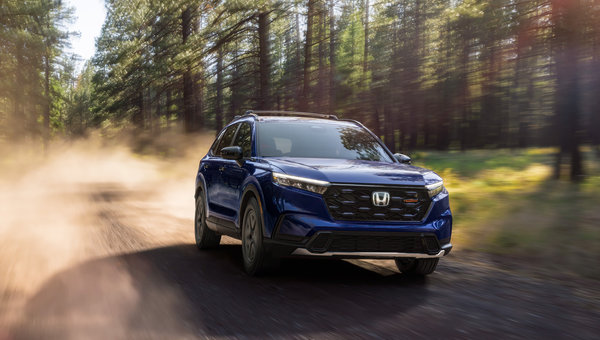
CR-V Hybrid: Matches the Accord’s output at 204 horsepower and 247 lb-ft of torque while adding standard all-wheel drive. With 1,028 liters of cargo space behind the second row, it effortlessly accommodates families in Lachenaie, Repentigny, or Terrebonne hauling kids, sports bags, and groceries. The TrailSport Hybrid trim, equipped with all-terrain tires, is rated at 6.7 L/100 km combined—a compelling option for cottage-bound gravel roads.
Ultimately, it offers the best of both worlds.
Who Benefits Most from a Hybrid?
-
Commuters logging 20,000 km or more annually.
-
Drivers facing routine gridlock on Highway 25, Highway 40, or Montreal river crossings.
-
Families taking frequent short trips between school, the rink, and the grocery store.
-
Drivers planning to keep their car long-term, backed by Honda’s 8-year or 160,000 km hybrid powertrain warranty.
Conversely, someone who logs low mileage or drives almost exclusively at steady highway speeds will take longer to offset the price premium. In that case, a traditional gas model may remain a sensible choice, particularly given Honda’s reputation for fuel-efficient combustion engines.
To determine how much a hybrid could save you, the best approach is to calculate using your actual driving habits. The team at Lallier Honda 40-640, located at 215 Des Migrateurs in Lachenaie, can run these numbers with you and arrange road tests of the Civic, Accord, and CR-V Hybrids along your typical driving routes.
It’s time to cut your fuel expenses. Stop by to discover which Honda hybrid fits your lifestyle best.