Is the 2026 Passport Too Big for Daily Driving in Terrebonne?
December 22 2025,
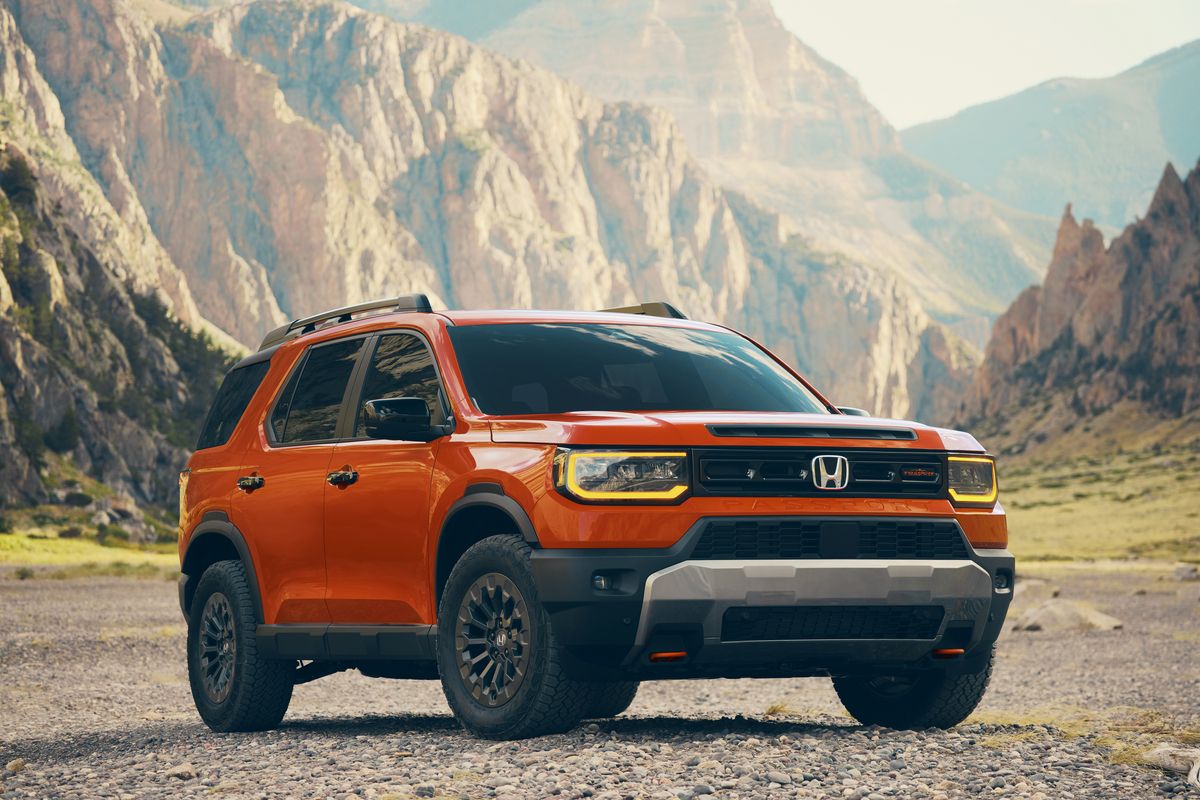
When it comes time to buy a new vehicle, it is important to properly evaluate your needs to find the model with the format that best meets them. If you live in Terrebonne or the surrounding area, your lifestyle may require a more spacious vehicle. But the opposite is also true if your reality mostly takes place around the city.
For example, you are currently driving a Honda CR-V and are considering upgrading to the 2026 Passport, but a question worries you: will this more imposing SUV be practical for your daily commute in Terrebonne? This is a legitimate concern.
Many buyers hesitate to choose a larger vehicle for fear of parking difficulties, reduced maneuverability, or excessive fuel consumption.
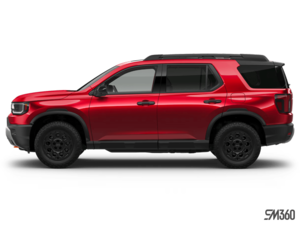
Let's examine the actual dimensions of the 2026 Passport, compare them to the CR-V, and see how this vehicle handles typical urban situations in the region and its surroundings.
Dimensions Comparison: 2026 Passport vs. 2026 CR-V
The size difference between the Passport and the CR-V is less significant than you might think. Here is a direct comparison:
| Dimensions | 2026 Passport | 2026 CR-V |
| Length | 4864 mm | 4694 mm |
| Width | 2019 mm | 1864 mm |
| Height | 1857 mm | 1681 mm |
| Wheelbase | 2885 mm | 2700 mm |
| Ground Clearance | 210 mm | 213 mm |
The Passport measures about seventeen centimeters more in length and fifteen centimeters more in width than the CR-V. This increase represents less than a foot in each direction—a difference you can feel, but one that isn't dramatic for daily use.
Parking at Regional Shopping Centers
Parking lots at malls like Carrefour Laval, Faubourg Boisbriand, or retail stores on Boulevard des Seigneurs in Terrebonne have standardized spaces of about 2.7 meters in width and 5.5 meters in length. The 2026 Passport, with its length of 4.86 meters, fits easily into these spaces with more than half a meter of clearance in the front or back.
The width of 2.02 meters (mirrors folded) leaves about thirty-five centimeters on each side in a standard parking space. That is enough to open the doors without hitting the car next to you, even if you have to be a little more careful than with a CR-V.
Parking Aid Systems
Even better, the 2026 Passport includes several technologies that make parking easier:
-
Multi-angle rearview camera that offers a panoramic view around the vehicle, facilitating parking maneuvers in tight spaces.
-
Front and rear parking sensors (depending on the trim) that warn of nearby obstacles.
-
Heated exterior mirrors with integrated turn indicators that improve lateral visibility.
These systems largely compensate for the size increase compared to the CR-V. Many owners report parking with as much confidence in the Passport as they did with their previous smaller vehicle thanks to these technological aids.
City Maneuverability

The turning circle of the 2026 Passport is 11.9 meters. To put that in perspective, the 2026 CR-V’s is about eleven meters. The one-meter difference means you will need a little more space to perform a complete U-turn, but this difference generally does not pose a problem in normal city driving.
On the residential streets of Terrebonne, Lachenaie, or Mascouche, the Passport drives surprisingly agilely. The variable-ratio electric power steering offers precise response at low speeds, making parking maneuvers or U-turns in cul-de-sacs relatively easy.
The Passport's longer wheelbase (2885 mm vs 2700 mm for the CR-V) actually improves straight-line stability. You will notice a more planted and confident driving sensation during daily trips.
Real-World Fuel Consumption
A common concern when moving to a larger vehicle is increased fuel consumption. The 2026 Passport is equipped with a 3.5-liter V6 engine producing 285 horsepower and 262 lb-ft of torque.
Official fuel consumption ratings are 12.6 L/100 km in the city and 9.9 L/100 km on the highway for a combined average of 11.4 L/100 km. Compared to the CR-V Hybrid, which achieves about 5.8 L/100 km combined, the Passport does indeed consume more fuel.
However, if you compare the Passport to the turbo engine (non-hybrid) CR-V, the difference is less pronounced. The turbo CR-V consumes about 9.5 L/100 km combined, representing an increase of about two liters per one hundred kilometers for the Passport.
For a daily commute of forty kilometers, this represents about 0.8 liters more per day, or about twenty-four liters more per month.
Verdict: Too Big or Just Right?
The 2026 Honda Passport is bigger than the CR-V, but this increase in size does not make it impractical for daily use in Terrebonne. The parking aid systems, responsive steering, and excellent visibility largely make up for the few extra centimeters.
If you value additional cargo space, superior towing capacity (2268 kg vs 680 kg for the CR-V), and a more confident road presence, the Passport represents a natural evolution from the CR-V rather than an unnecessary leap into a massive vehicle category.
Visit Lallier Honda 640 in Lachenaie to test drive the 2026 Passport and judge for yourself if its dimensions suit your lifestyle. A test drive on the local roads you use regularly will give you the best indication of its fit for your needs.